
Hospitality estates share a pattern. Units are fitted out quickly against a trading date that cannot move. Each unit sits inside a landlord's building with its own fire strategy and its own compartment lines. The fit-out puts extract ducts, gas, power, data and drainage through those lines. And the licence to occupy usually requires the tenant to evidence that they did it properly.
Kitchen extract is the particular issue. A grease extract duct crossing a compartment wall is a demanding penetration — it is hot, it is large, it needs cleaning access, and the detail that seals it has to be tested for exactly that configuration. It is also the penetration most likely to be cut in late in the programme by a specialist contractor who has left before anybody asks about the seal.
For a brand operating dozens of units, the estate-level problem is consistency: proving the same standard was applied in Glasgow as in Guildford, by different fit-out contractors, two years apart.
The regulations that bite in this sector
- Regulatory Reform (Fire Safety) Order 2005 — duties on the operator as Responsible Person for the demised premises.
- The lease and licence to alter — almost always requiring evidence of compliant fire stopping at handover.
- Regulation 38 of the Building Regulations — fire safety information handed to the Responsible Person at completion.
- BS EN 1366-1 and 1366-3 for ventilation duct and service penetration seal performance.
- BS 8214 for doorsets to back-of-house, storage and escape routes.
What we typically find
- Kitchen extract ducts crossing compartment walls with foam or plasterboard packing instead of a tested detail.
- Fit-out penetrations for gas, power and data left unsealed above ceilings where nobody looks.
- Back-of-house and escape-route doorsets with closers removed for operational convenience.
- Cold room and store constructions built against, and breaching, compartment walls.
- No handover evidence at all from the fit-out contractor — the operator inherits an unknown position.
- Different standards applied across an estate because each unit used a different fit-out contractor.
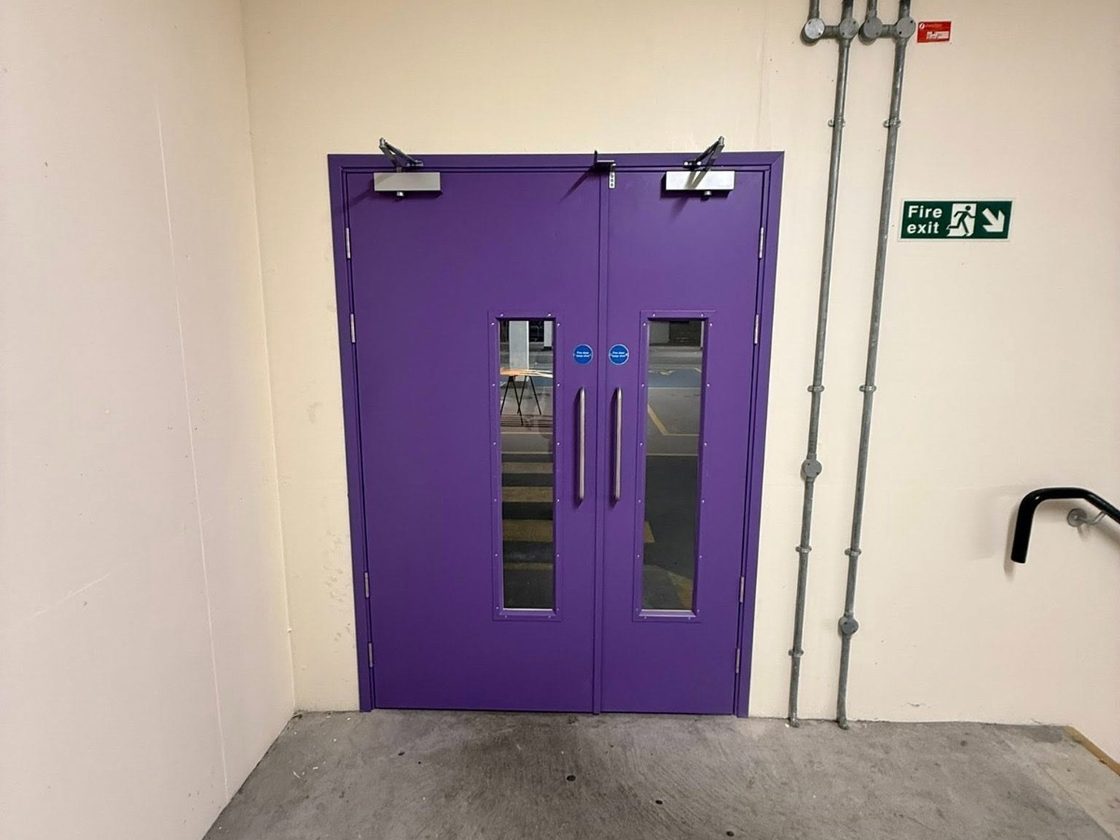
Illustrative — our own project photography is being added as we collect it.
Working inside the constraints
Fit-out programme pace — We work to the trading date, mobilise at short notice, and get seals in before the ceilings close rather than after — which is the only time the evidence photograph can be taken.
Kitchen extract done properly — Grease duct penetrations sealed to the tested detail for that duct, substrate and aperture, with cleaning access preserved.
Estate-wide consistency — One specification and one register across every unit, so the brand can demonstrate the same standard regardless of who fitted out which site.
Handover evidence pack — Photographed, scheme-referenced records the operator can put in front of the landlord, the insurer or the local authority at handover.
Related work
Fast, evidence-led delivery in live public environments, with the record produced as the work happens.
From enquiry to certification
Enquiry
Tell us about the building and the works you need.
Site survey
Every asset inspected, photographed and QR-tagged.
Specification
Clear scope and pricing against tested systems.
Certified works
Competency-assessed operatives under scheme control.
Evidence pack
Photos, registers and product data for every asset.
Certification
Q-Mark labelled, registered and traceable for life.
Tell us about the building.
A short conversation is usually enough for us to tell you what a survey or a package of works looks like and what it costs. Call 020 8769 8869.
Tell us about the site
Send us the details and anything you already have — drawings, an old survey or photos. We will be in touch within one working day.
- BM TRADA Q-Mark certified, certificate 4515
- Named Approved Persons accountable for the work
- Every asset photographed and recorded
Prefer to talk? Call 020 8769 8869 (Mon–Fri 07:30–17:30) or email fire@arcticltd.com.